Thyroid dysfunction
Symptoms of thyroid dysfunction in women and men.
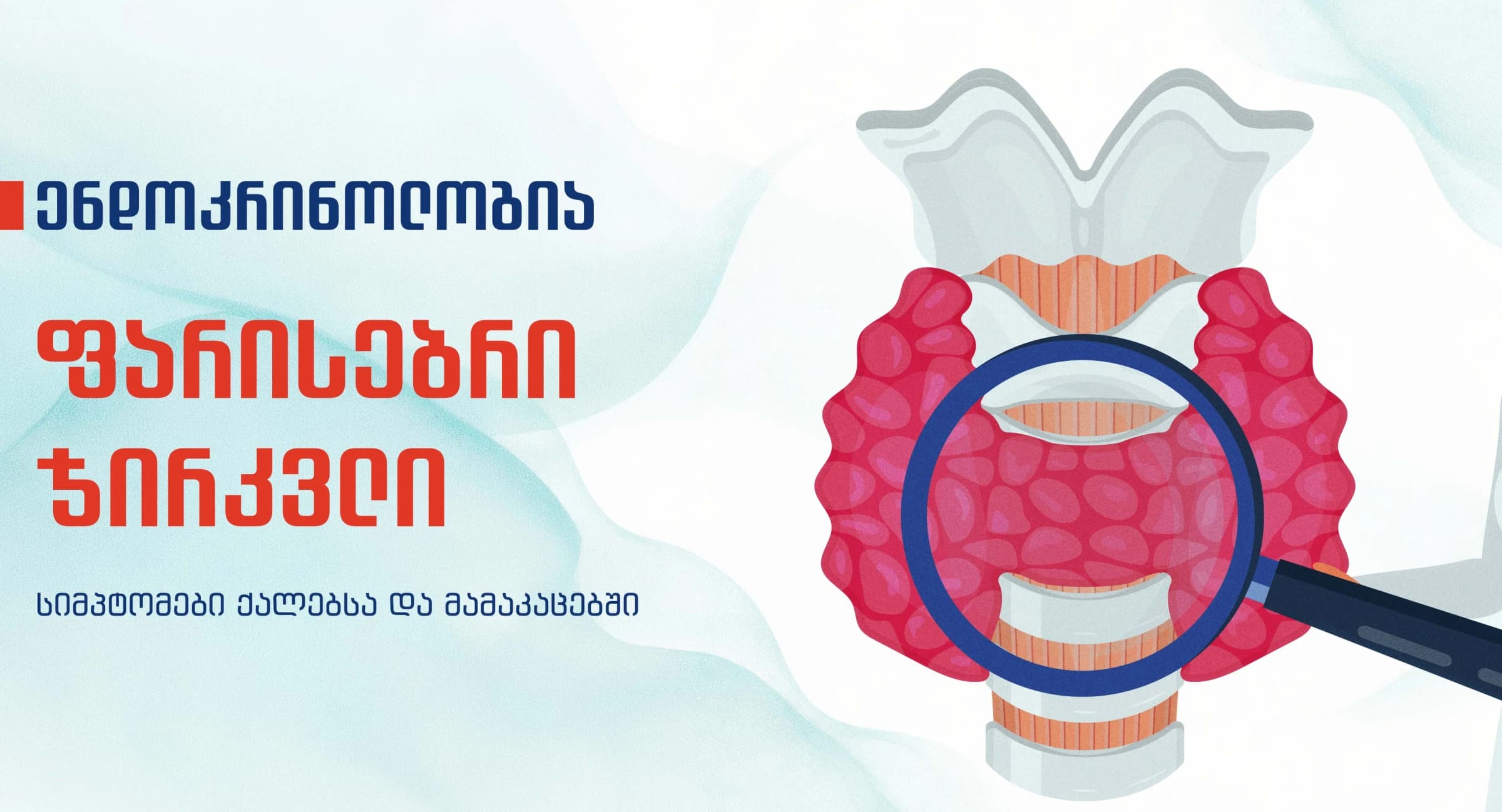
The thyroid gland is one of the most powerful endocrine organs in the human body, regulating the work of almost all cells and metabolic processes. Its dysfunction is reflected in the entire body and causes systemic changes: weight, heart rate, mental state, reproductive function. Symptoms are often non-specific, so the diagnosis remains undiagnosed for years. In this article, we will discuss how to recognize the signs of hypo- and hyperthyroidism, which tests to perform first, when ultrasound is necessary, and how these conditions are managed in modern medicine.
Anatomy, hormones produced and their physiological role
The thyroid gland is located on the front surface of the neck, below the larynx and in front of the trachea. It is made up of two lobes, the left and the right, which are connected by a connecting bridge (isthmus). The normal functioning of the gland is strictly controlled by the central regulator of the brain, the hypothalamus-pituitary system.
Regulatory mechanism: The hypothalamus secretes the hormone TRH, which stimulates the pituitary gland. The pituitary gland produces TSH (thyroid-stimulating hormone). TSH is the main signal that tells the thyroid gland how much hormone to produce. That is why TSH is the most sensitive screening indicator.
Hormones produced by the thyroid gland:
- Thyroxine (T4): The main form secreted by the gland into the blood. It is converted to the active form in the tissues.
- Triiodothyronine (T3): The most active hormone, directly activating cellular processes.
- Calcitonin: regulates the metabolism of calcium and phosphorus in the body and ensures the strength of bone tissue.
The main physiological role of thyroid hormones:
- Metabolism and energy: Determine how quickly the body processes food and produces heat and energy.
- Cardiovascular system: Regulates heart rate and arterial tone.
- Nervous system and psyche: control brain activity, attention, memory, and emotional background.
- Growth and development: Critically important for the formation of the nervous system and skeletal system in childhood.
Clinical complaints and manifestations: hypo- and hyperthyroidism
Hormonal imbalance causes two opposite pathological conditions in the body.
Hypothyroidism (hormone deficiency)
Imagine an organism that has entered a strict energy-saving mode. At this time, body mass increases, even though appetite is reduced, because metabolism is extremely slow.
General complaints: constant fatigue from the morning, drowsiness, apathy, memory impairment and slowed thinking. Patients are constantly cold, have cold extremities; the skin becomes dry, rough and flaky, hair thins and falls out. Swelling appears on the face and extremities (especially around the eyes, in the morning), the voice becomes rough and hoarse. The pulse is slow (bradycardia), blood pressure is often low. The intestines are disturbed, the patient suffers from chronic constipation (constipation) and bloating.
Hyperthyroidism (excess hormones)
Metabolism and weight: Body mass decreases dramatically, even though the patient has a significantly increased appetite.
General complaints: constant anxiety, emotional outbursts, insomnia, decreased performance and rapid movements. Acute intolerance to heat, profuse sweating (the skin is always moist and hot). Rapid heartbeat (tachycardia): the pulse is high even at rest, palpitations and arrhythmias are common. Fine tremors of the hands are characteristic; the eyes are wide open and protruding (exophthalmos). Peristalsis accelerates, which causes the patient to have frequent defecation and intestinal spasms.
Comparison in one table:
Sign | Hypothyroidism (hormone deficiency) | Hyperthyroidism (excess hormones) |
|---|---|---|
Weight and appetite | Weight gain, appetite decreased | Weight loss is dramatic, appetite is increased |
Energy and psyche | Fatigue, drowsiness, apathy, memory loss | Anxiety, emotional outbursts, insomnia, rapid movements |
Heart rate and blood pressure | Bradycardia, low blood pressure | Tachycardia, palpitations, arrhythmias |
Temperature perception | Constantly feeling cold, cold extremities | Heat intolerance, heavy sweating |
Skin and hair | Dry, rough, flaky skin; hair loss | Moist, hot skin |
Face and eyes | Swelling, especially around the eyes; hoarse voice | Protruding eyes (exophthalmos) |
Intestine | Chronic constipation, bloating | Frequent defecation, spasms |
Limbs | Swelling | Fine tremors of the hands |
Gender characteristics: women and men
Endocrine imbalances have a profound impact on the reproductive system, where symptoms manifest differently depending on gender.
Thyroid symptoms in women
- Hypothyroidism: severe menstrual cycle irregularities (very light or scanty flow, missed periods), ovulation disorders, infertility , and risk of spontaneous abortion.
- Hyperthyroidism: a sharp decrease or complete disappearance of menstruation (amenorrhea), impaired follicular maturation, and risk of early menopause.
Thyroid symptoms in men
- Hypothyroidism: A sharp decrease in libido (sexual desire), erectile dysfunction, and poor sperm quality.
- Hyperthyroidism: Changes in testosterone metabolism, erectile dysfunction, and sometimes breast enlargement (gynecomastia).
Diagnostics: Laboratory tests and ultrasound
Accurate identification of pathology is achieved through a synthesis of laboratory and instrumental studies.
Which analysis should we conduct?
Analysis | What does it show? | Adult norm (guideline) |
|---|---|---|
TSH (Thyroid Stimulating Hormone) | The primary and most sensitive marker. It is markedly elevated in hypothyroidism, and suppressed (close to zero) in hyperthyroidism. | 0.4-4.0 mIU/l |
Free T4 (FT4) | Clarifies the actual hormonal activity of the gland | 9-19 pmol/l (0.7-1.5 ng/dl) |
Free T3 (FT3) | The level of the most active hormone; especially informative in hyperthyroidism | 3.1-6.8 pmol/l |
Anti-TPO | Autoimmune marker; necessary for detecting Hashimoto's thyroiditis | < 34 IU/ml |
TRAb | Autoimmune marker for differentiation of Graves' disease | Negative |
Norms vary slightly between laboratories; always refer to the reference range indicated on the sheet.
How do we read the result:
- TSH is markedly elevated, FT4 is low: hypothyroidism.
- TSH is suppressed, FT4/FT3 is elevated: hyperthyroidism.
- Anti-TPO is elevated: autoimmune process (Hashimoto's thyroiditis).
- TRAb positive: Graves' disease.
Ultrasound examination (ultrasound): when is it necessary?
The analysis shows the function of the gland, while ultrasound shows its structure. It is needed to visualize the size (volume) of the gland, structural heterogeneity, inflammatory processes, and nodular formations. Ultrasound helps the doctor determine whether there has been structural damage and whether there is a risk of tumor formation.
Ultrasound is prescribed when:
- A lump or enlarged gland can be felt in the neck;
- Tests have determined hypo- or hyperthyroidism (to determine the cause);
- Anti-TPO is elevated (to assess inflammatory, autoimmune process);
- There is a family history of thyroid cancer, or you have had radiation to the neck;
- The mass was discovered accidentally during an examination performed for another reason;
- It is necessary to observe the dynamics of an already known node.
The ultrasound procedure is painless and does not require special preparation. More details about our ultrasound service: Ultrasound at Bochorishvili Clinic .
Treatment methods
The treatment regimen for both pathologies is fundamentally different.
Management of hypothyroidism: Long-term or lifelong replacement therapy with synthetic levothyroxine is performed. The dose of the drug is selected strictly individually, depending on the patient's weight and age, with regular laboratory monitoring of TSH.
Management of hyperthyroidism:
- Drug therapy: Thyrostatic drugs are prescribed to block hormone synthesis, and beta-blockers are prescribed to relieve symptoms (tachycardia and palpitations).
- Alternative methods: In case of ineffectiveness of medications or relapses, radioactive iodine therapy (to suppress the activity of the gland tissue) or surgical intervention, thyroidectomy (removal of the gland) is used. Thyroid surgeries are performed by the Department of General Surgery of the Bochorishvili Clinic .
Thyroid examination at Bochorishvili Clinic
The clinic offers a complete thyroid evaluation in one visit: endocrinologist consultation , hormonal panel and autoimmune markers in the laboratory , and ultrasound with modern equipment. Registration: online or 0322 312 112.
Frequently Asked Questions