Purulent surgery: when does an abscess need to be opened?
When does a purulent infection require drainage, what are the signs of danger, and how is treatment and wound care performed?

Purulent surgery is required when management of the infection requires drainage of pus, removal of damaged tissue, or other treatment of the infected area. In the case of an abscess, antibiotics alone are often not sufficient. The need for intervention is determined by the location, depth, spread of the infection, and the patient's condition.
A small painful lump on the skin and a deep tissue infection can sometimes look similar on the outside. That's why it's important to get an examination before choosing a treatment. Self-squeezing or changing antibiotics can delay a timely assessment.
Why antibiotics fail to clear an abscess - a physiological explanation
An abscess is a cavity in which pus collects. The medicine may work on susceptible bacteria, but it cannot mechanically remove the accumulated mass. During drainage, the doctor creates a path for the pus to drain and treats the area. 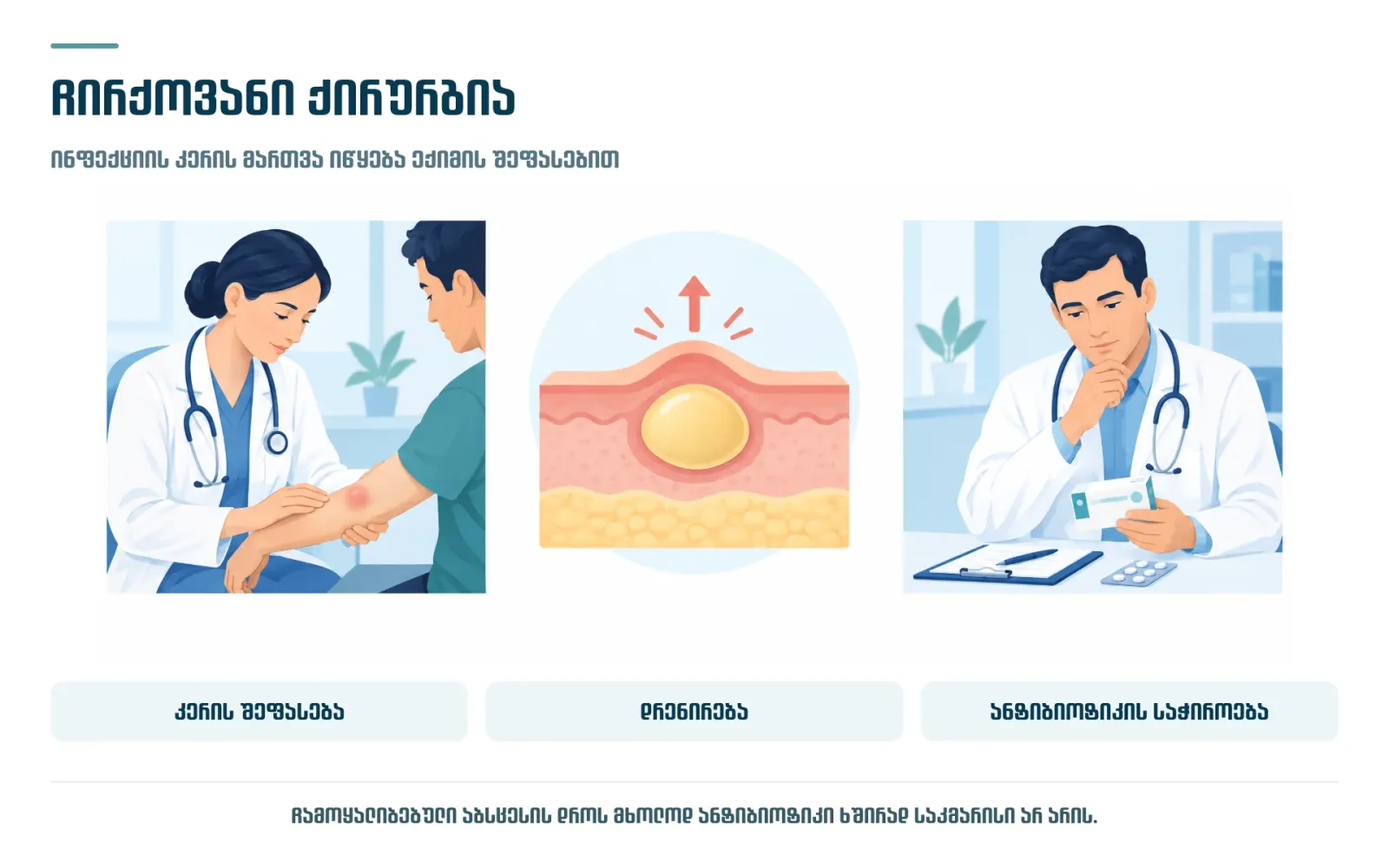
This does not mean that antibiotics are useless. They may be necessary in cases of widespread infection, general symptoms, immunosuppression, or other risks. The need for drainage and antibiotics is assessed separately; the patient should not decide that one treatment always replaces the other. Source: IDSA - Skin and Soft Tissue Infections .
Types of purulent process: abscess, phlegmon, infected wound
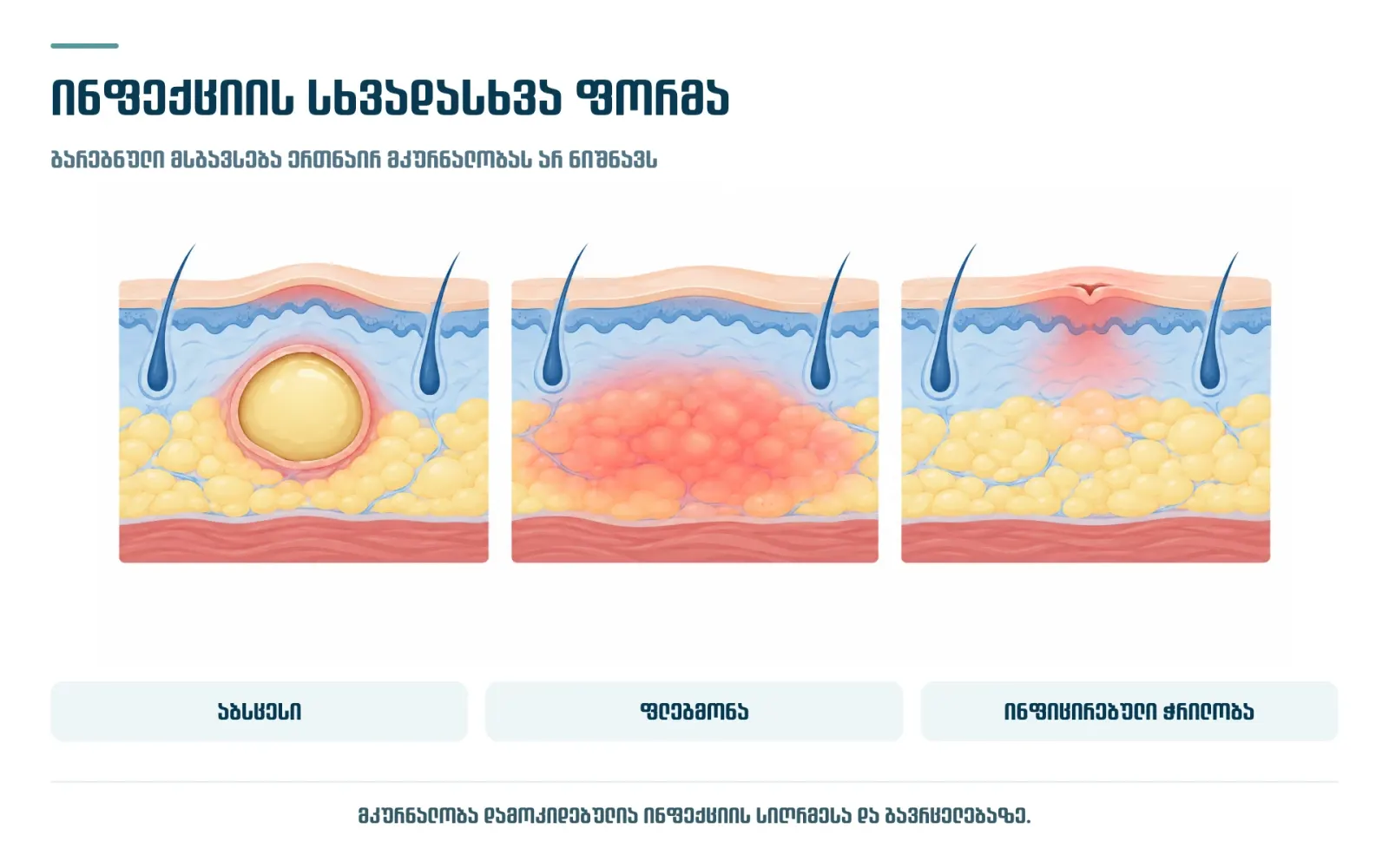
An abscess is a localized collection of pus. A superficial abscess may be painful, hot, and swollen, while a deeper abscess may be less visible from the outside.
Phlegmon describes a more diffusely spread infection in the tissues, which may not have a clearly demarcated cavity. Management depends on the extent of spread and the tissues involved.
An infected wound can develop after trauma or surgery. It is characterized by increasing redness, pain, swelling, and pus. The doctor will assess whether the wound is superficial or requires more extensive treatment. Source: IDSA .
Danger signs - when to see a doctor immediately
Urgent evaluation is needed if the pain increases rapidly or is unusually severe compared to the external injury; redness and swelling spread rapidly; blisters, dark areas, or loss of skin sensation appear. These signs may indicate a deep, rapidly progressing infection. Source: CDC - Necrotizing Fasciitis . 
If a person becomes unconscious, has difficulty breathing, becomes severely weak, or loses consciousness due to an infection, call 112. Do not wait for the pus to drain on its own or for the next dose of medication.
Sepsis Risk - Why It's Not Worth Waiting
Sepsis occurs when the body's response to infection impairs organ function. Not every abscess will progress to sepsis, but a change in general condition along with a worsening infection requires urgent evaluation.
Of particular note are new confusion, difficulty breathing, cold or clammy skin, and an unusually severe general condition. The absence of a high fever does not rule out a serious infection. Source: CDC - Sepsis .
Diagnostics

The evaluation begins with an examination and questions: when did the lesion appear, whether it is growing, whether there has been trauma, surgery, or a similar episode. This is sometimes sufficient to identify a small superficial abscess; if a deep abscess is suspected, an ultrasound or other imaging may be necessary.
Blood tests and microbiological tests are ordered by the doctor for a specific purpose. A pus sample can help select an antibiotic, but in a life-threatening condition, treatment should not be delayed while waiting for the results. Sources: NHS - Abscess , IDSA .
Principles of treatment - drainage, wound management, antibiotic therapy
An additional overview of treatment methods can be found in the clinic's blog about purulent surgery .
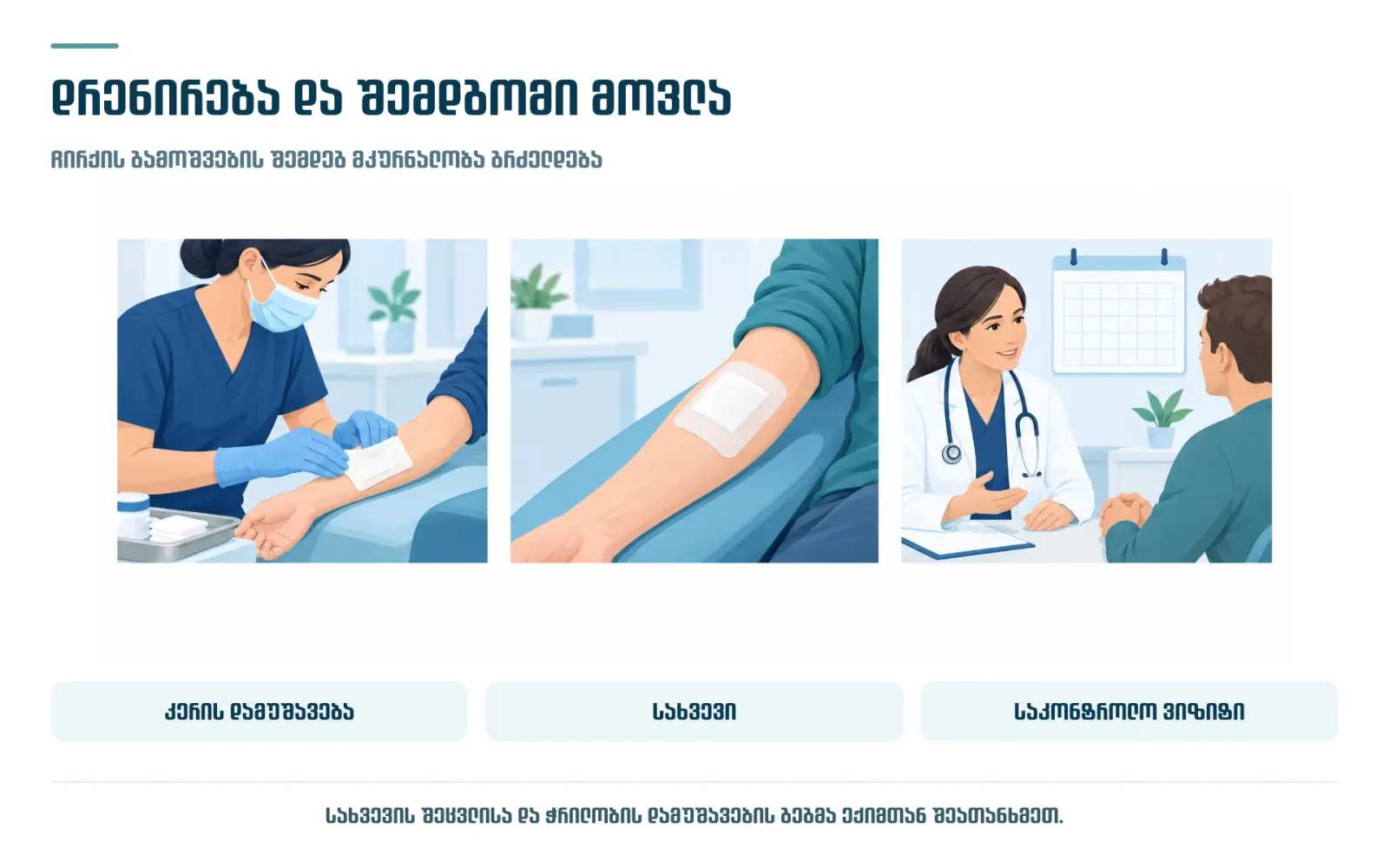
Drainage can be performed under local anesthesia; larger, deeper, or more difficult-to-reach areas require different conditions. After the pus is drained, the wound is sometimes left open to prevent further accumulation of pus. Bandaging and follow-up visits are part of the treatment.
Discuss with your doctor in advance: when to change the dressing, who will do the initial treatment, and how to assess healing. Just because pain is reduced does not always mean that further care is no longer needed. Source: Hull University Teaching Hospitals — Opening and draining an abscess .
Wound care at home after surgery
Follow written discharge instructions. Wash hands before touching the dressing, maintain the prescribed dressing change schedule, and do not put ointment, powder, or other substances in the wound without the doctor's approval. Procedures for removing tampons or drains should be agreed upon with the team.
If pain and redness increase, fever develops, there is significant bleeding, or the discharge changes dramatically, contact your doctor. It is helpful to note the time of the change and any accompanying symptoms for your visit. Source: University Hospital Southampton - Post-Drain Care .
High-risk groups - diabetes, immunosuppression
Infection requires special attention during diabetes or immunosuppressive treatment. The infectious diseases department of the clinic also serves to evaluate general infectious conditions . Inform the doctor about steroids, chemotherapy, and other immunosuppressive drugs. Lack of pain is not a sign of safety, especially when sensitivity is also reduced.
The Department of Purulent Surgery of the Bochorishvili Clinic manages abscesses, phlegmons, infected wounds and diabetic foot infections. When applying, describe both the local change and the general condition.
Frequently Asked Questions