Gastroscopy - what to expect and how to prepare
Discover how modern endoscopy provides safe, precision-oriented diagnostics and a stress-free experience.
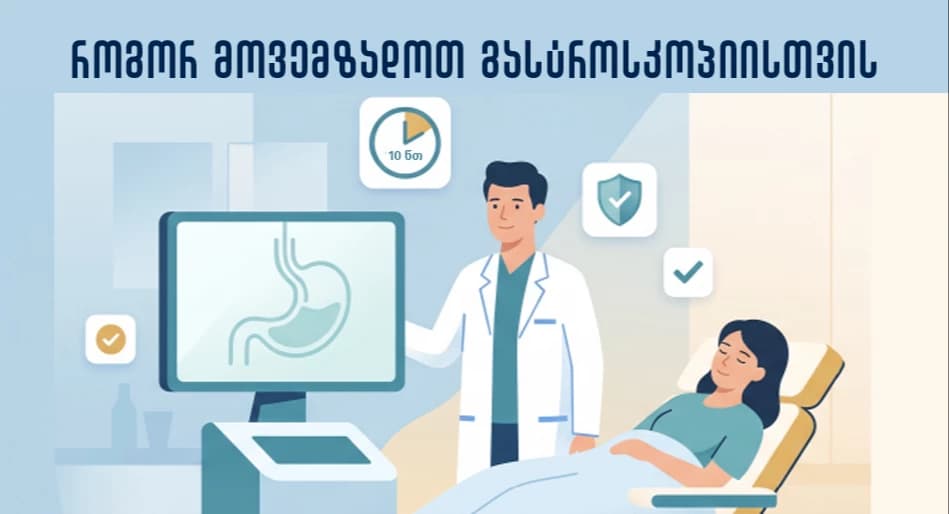
Gastroscopy (upper endoscopy ) is a test in which a doctor examines the esophagus, stomach, and duodenum with a special camera - an endoscope.
It is used to identify symptoms such as:
- Heartburn and acidity;
- Upper abdominal pain;
- Nausea, vomiting;
- Anemia of unknown cause;
- Difficulty swallowing.
Also, during the examination, a biopsy (a small sample) may be taken for diagnosis. 
How to prepare for gastroscopy?
Proper preparation is very important for the quality and safety of the research.
Key recommendations:
- Do not eat for at least 6-8 hours beforehand;
- Liquid (water) – can be taken 2–3 hours before in small quantities;
- Do not smoke or drink alcohol before the test.
Tell your doctor if you are taking:
- Blood thinners;
- Diabetes medications;
- Allergy to medications.
If the stomach is full, the risk of aspiration (food getting into the lungs) increases – so fasting is critical.
How is the procedure going?
The procedure usually lasts 5–10 minutes.
Research stages:
- The patient lies on his left side;
- A special mouth guard is placed in the mouth;
- Anesthesia (local or sedation) is administered;
- The endoscope is inserted carefully;
- The doctor views the mucosa on a large screen and takes a biopsy if necessary.
The procedure is painless in most cases, with only minor discomfort possible. 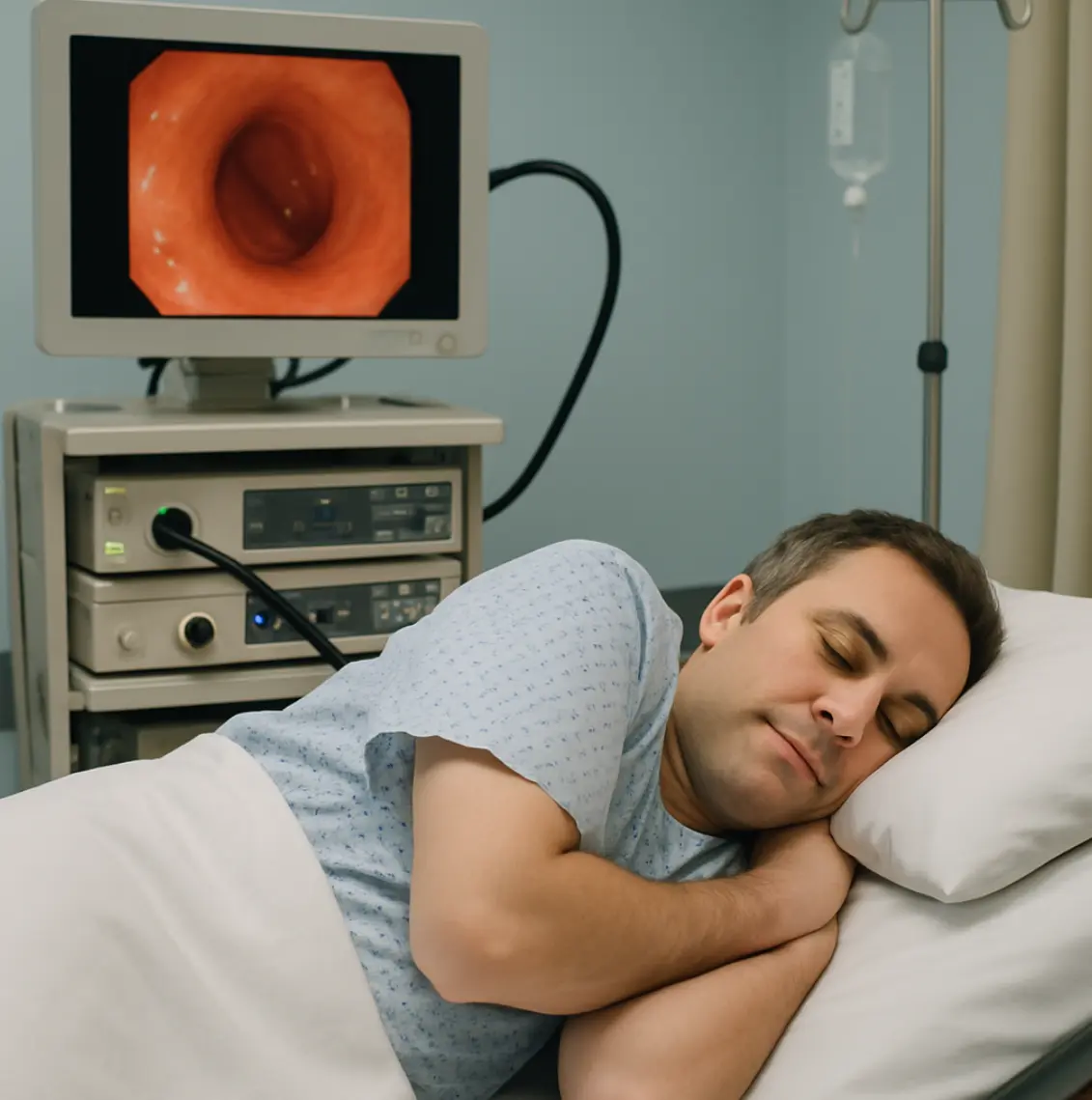
Helicobacter pylori detection – urease test
Helicobacter pylori is a bacterium that lives in the stomach lining and is associated with:
- With gastritis;
- With an ulcer;
- In some cases, with stomach cancer.
How is it detected during endoscopy?
During an endoscopy, Helicobacter pylori is diagnosed by a doctor taking a small biopsy from the stomach. The sample is placed in a special medium (urease test), and if the bacteria are present, a color change occurs. The answer is often ready within a few minutes.
Gastroscopy can be performed under local anesthesia, in which a spray is applied to the throat and the patient is fully awake. It can also be performed under sedation (light sleep), which is the most common method. During this procedure, medication is used, and the patient is "asleep" and does not feel anything.
Security
According to the guidelines
The procedure is considered very safe. Serious complications are very rare (<1%). Pulse, oxygen levels, and blood pressure are constantly monitored. In healthy patients, the risk is minimal.
What should we know after the procedure?
Do not drive for 12-24 hours after sedation. A slight sore throat is possible. You can start eating on the recommendation of your doctor.
Let's remember: gastroscopy is a fast, highly informative and safe procedure. It allows for an accurate diagnosis, detection of Helicobacter pylori and initiation of targeted treatment in a timely manner.
Plan your visit for long-term peace of mind
The first step is to visit a gastroenterologist. The doctor will assess your health condition. Then he will give you recommendations for further tests.
In some cases, the Helicobacter test is not informative. This happens if the patient is taking certain medications at the time. Targeted examinations will be carried out on the recommendation of a gastroenterologist.
If necessary, a gastroscopic examination will be scheduled using one of the most modern instruments – Olympus Exera III – which allows us to see even the smallest changes in the stomach and esophagus. This means a more accurate diagnosis and more effective treatment for you. 
Frequently Asked Questions