 ქართული
 English
 Русский
Blog
The impact of air pollution on the lungs
The impact of air pollution on the lungs
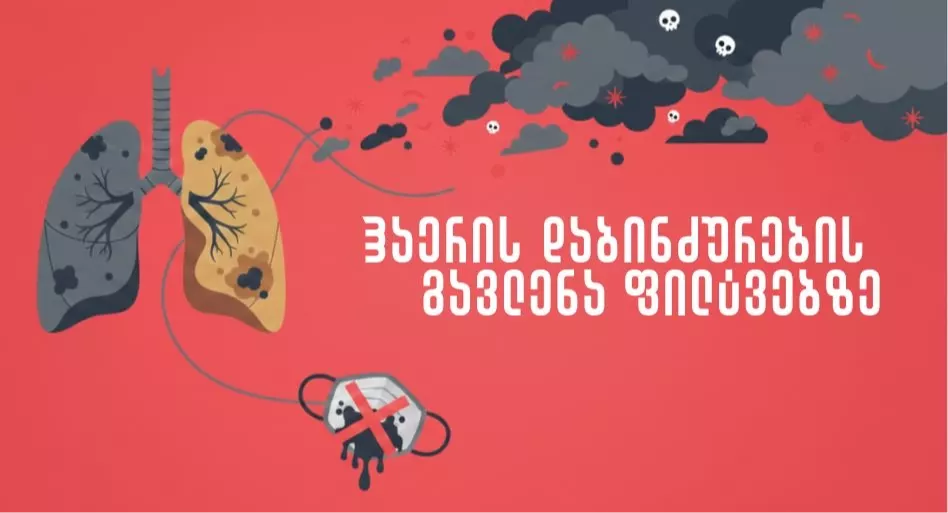
Air Pollution and the Importance of Pulmonary Function Tests in Assessing Respiratory Health
Every day, when we breathe, an invisible storm of particles and molecules enters our body, posing a threat not only to our lungs but to the entire organism. However, have you ever thought about the importance of clean air? As a significant determining factor of your health and well-being.
Air pollution represents a significant threat and is one of the leading causes of mortality among all risk factors. According to WHO estimates, globally, air pollution is responsible for approximately 7 million premature deaths annually due to ischemic heart disease, stroke, chronic obstructive pulmonary disease, and lung cancer.
Breathing for the Future
Imagine yourself in the position of a doctor when you meet a young girl who frequently suffers from asthma attacks. As you begin collecting her medical history, you realize that there may be more to this story than meets the eye. Could air pollution be a primary risk factor to consider when evaluating the patient? What additional questions would you ask? What would you advise her to reduce the risk?
Since air pollution levels are very high in Tbilisi and other cities, it is necessary to conduct pulmonary function tests in order to detect disease at an early stage and prevent complications.
Author: Ani Moseshvili - Pulmonologist at Academician Vakhtang Bochorishvili Clinic
Air pollution is considered one of the significant risk factors in the development and progression of chronic respiratory diseases. Numerous studies confirm that chronic exposure to polluted air can significantly reduce pulmonary functional parameters, which are easily detected through pulmonary function testing.
Why Does Lung Function Decrease in a Polluted Environment?
Chronic inflammation: Harmful air particles cause irritation and inflammation of the bronchial mucosa, which obstructs the free movement of air.
Airway remodeling: Frequent exposure to polluted environments leads to structural changes in microscopic airways, reducing lung elasticity.
Diffusion impairment: Small particles reach the alveoli and interfere with oxygen exchange, which is reflected in the DLCO value.
In central districts of Tbilisi, such as Didube, Tsereteli, Varketili, and Aghmashenebeli Avenue, air pollution levels often exceed WHO recommended limits. Residents of these areas more frequently consult doctors with the following symptoms:
Persistent cough;
Shortness of breath;
Exercise intolerance.
Pulmonary function tests in these individuals often reveal:
Reduced FEV₁ (<80% of normal);
Low FEV₁/FVC ratio (<0.7), indicating obstructive diseases;
Decreased DLCO in those who have worked for years in the transport sector or live near main roads.
Access to pulmonary function tests (spirometry, lung volumes, CO diffusion) is available at Academician Vakhtang Bochorishvili Clinic. Pulmonary function testing allows us to assess not only individual health status but also the scale of environmental impact. This connection requires special attention in public health planning — especially in urban centers where pollution and lung function disorders are steadily increasing.
Author: Ani Moseshvili - Pulmonologist-Phthisiatrist.