 ქართული
 English
 Русский
Blog
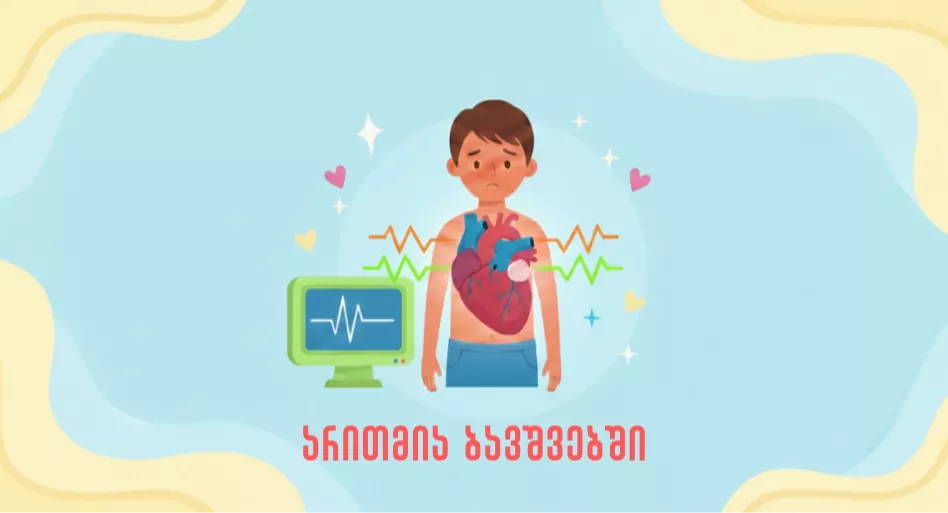
Arrhythmia in children – what parents should know.
Arrhythmia in children – what parents should know.
Interview with Pediatric Cardio-Rheumatologist - Nino Jobava
What is arrhythmia and how common is this problem in childhood?
Arrhythmia is a disturbance of the rhythm of the heartbeat, when the heartbeat is either very fast, very slow, or irregular. In childhood, the percentage rate of arrhythmia development is relatively low; however, there are forms that may become noteworthy or life-threatening. In many cases, arrhythmia proceeds in a benign form and disappears over time.
Which children are at higher risk?
In childhood, the risk of developing arrhythmias is higher in cases of congenital heart defects, genetic syndromes, and infectious-inflammatory processes, as well as in conditions of vegetative nervous system imbalance and hormonal imbalance.
What types of arrhythmias occur in children?
Conditionally, there are several main groups:
- Heart rate disorders: tachyarrhythmia (accelerated heartbeat) and bradyarrhythmia (slowed heartbeat).
- According to origin: sinus arrhythmia (often physiological, associated with breathing), atrial and ventricular arrhythmias. Ventricular forms are the most dangerous, as they may cause sudden cardiac arrest.
- Conduction disorders.
Pediatric arrhythmia: symptoms and ways for parents to recognize it
Symptoms vary:
- Palpitation - sensation of accelerated or irregular heartbeat;
- Fatigue, weakness, dizziness;
- Episodes of short-term loss of consciousness (syncope);
- Shortness of breath, chest pain;
- Rarely - sudden cardiac arrest.
Sometimes arrhythmia proceeds without symptoms, therefore parents should pay close attention to the child’s complaints.
How is arrhythmia diagnosed in children?
- Electrocardiography (ECG) - the gold standard, a simple and non-invasive method.
- Holter monitoring - for diagnosing episodic disturbances.
- Echocardiography - to assess the structure and function of the heart.
- In complicated cases, electrophysiological study is used.
What is the treatment strategy?
Some arrhythmias do not require specific medication and disappear with age.
- Medication therapy is used.
- In severe forms - invasive methods: ablation and implantation of special devices.
- Lifestyle correction is important: control of physical activity, regulation of electrolytes and hormonal balance.
Is it true that helminthiasis can cause arrhythmia?
There is no direct connection; however, indirectly, against the background of anemia, intoxication, vegetative nervous system imbalance, and allergic reactions caused by helminthiasis, it may contribute to the manifestation of sinus arrhythmia.
What should a parent do if they suspect that a child has arrhythmia?
A parent should not ignore symptoms. It is necessary:
- To observe the child’s heartbeat and complaints;
- Timely consultation with a pediatrician and pediatric cardiologist;
- Conduct diagnostic examinations.
The prognosis depends on the type of arrhythmia and timely diagnosis.
Leave in the comments what complaints your child had, what type of arrhythmia, which diagnostic tests and what kind of treatment were carried out - your experience will help other parents as well.